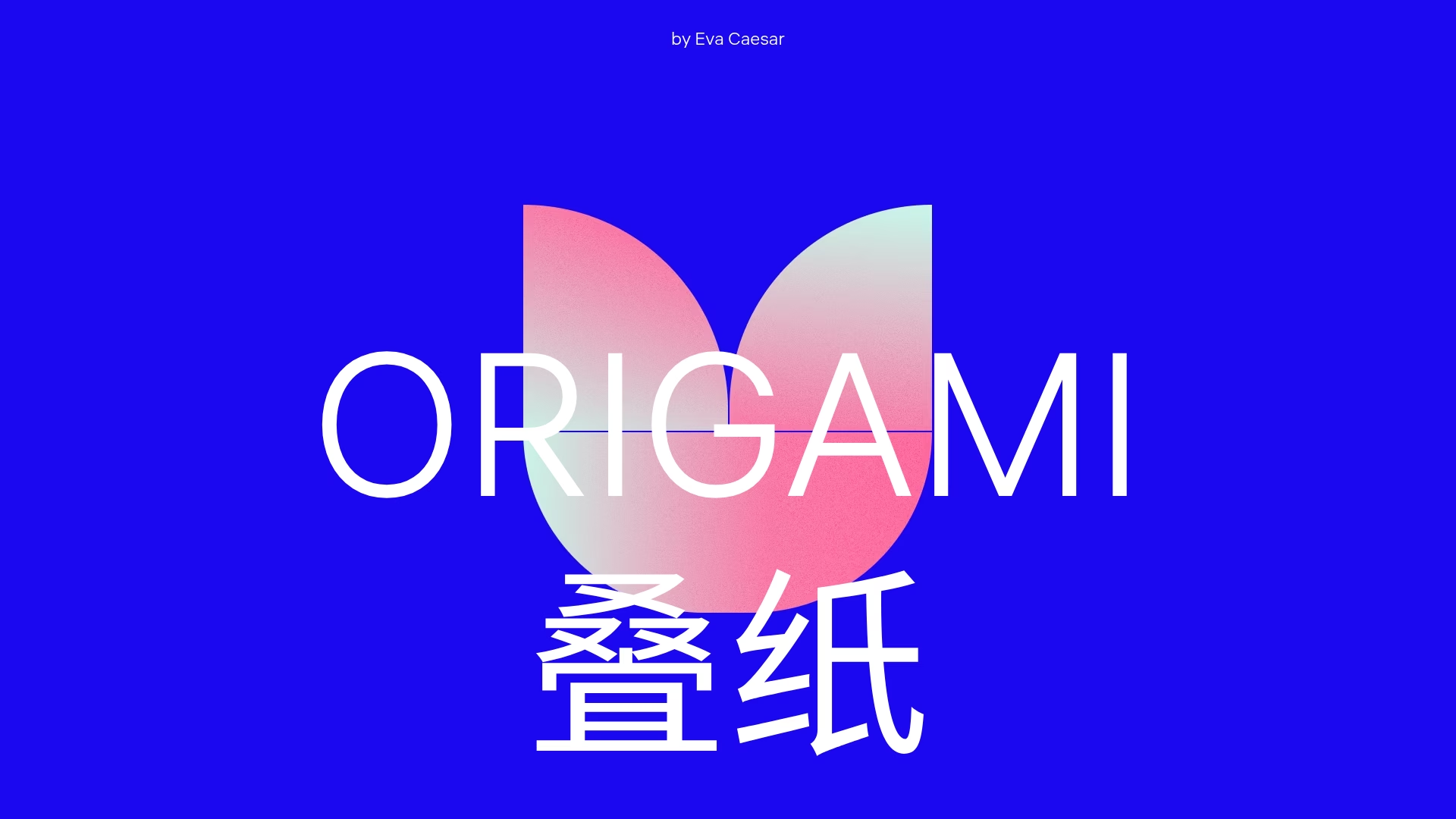






Author and topic: Eva Caesar, Origami.
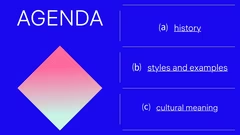
Agenda with main sections: history, styles, cultural meaning.
Section header: history of origami.
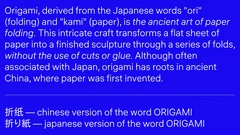
Origami origins and etymology in Japan and China.
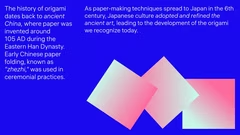
Origami history in China and Japan.
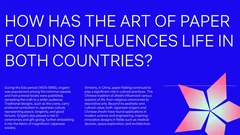
Influence of origami on life in China and Japan.
Section header: origami styles and examples.
Origami has many different styles.
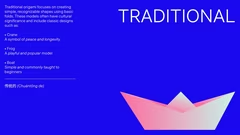
Traditional origami styles and examples.
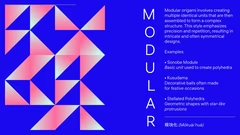
Modular origami styles and examples.
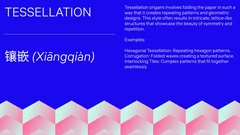
Tessellation origami styles and examples.
Other origami styles: action, wet-folding, etc.
Section header: cultural meaning of origami.
Cultural significance of origami in Japan and China.
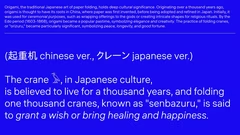
Senbazuru: one thousand cranes symbolism.
Spirit, sign, and mind in origami culture.
Metaphor about origami and the human soul.
Thank you slide.
PRO

Origami History and Culture

18 slides

Template for a lecture on origami: history, styles, cultural significance.

hauss
View template

About the template

The lecture template is intended for creating presentations that provide structured information about origami, including its history, various styles, and cultural significance. It includes text blocks, headings, and supports the addition of images and diagrams.
Applying the Template in Educational Presentations

The template allows you to create educational presentations on a variety of topics. The structured design helps organize information in a logical sequence, which facilitates perception by the audience. For example, when preparing a lecture on the history of origami, you can divide the material into sections such as origins, development, and contemporary uses. Headings and subheadings help highlight key points, while text blocks enable detailed explanations. The template is appropriate for academic or cultural presentations aimed at imparting knowledge.
Presenting Different Origami Styles

The template can be used to demonstrate various origami styles, including traditional, modular, and tessellation. Each style can be allocated its own section with descriptions and examples. The traditional style section might feature classic models like the crane and frog, with an explanation of their cultural importance. The modular section could show how individual elements combine to create complex structures, for example, sonobe modules or kusudama. The tessellation section can include visual examples of repeating patterns and geometric designs, helping to provide a comprehensive overview of the styles.

Emphasizing the Cultural Aspects of Origami

With this template, you can explore the cultural role of origami in Japan and China. You can create sections that describe the use of origami in ceremonies and as gifts. The presentation can cover the symbolism of the crane, which in Japanese culture stands for peace, longevity, and good luck. Additionally, you can discuss the idea of senbazuru (one thousand cranes) and its connection to wishes and healing. Adding quotes or reflections on the deeper significance of origami can enrich the presentation and make it more interesting for the audience.


Advice for Crafting a Successful Presentation

  • Begin with an agenda to help the audience follow the structure of the presentation.
  • Use headings and subheadings to divide complex material into logical parts.
  • Add visual aids, like photos of origami models, to improve comprehension.
  • Mention practical uses of origami in fields such as engineering and architecture to illustrate its contemporary relevance.
  • Conclude with a summary of the main points to reinforce the key messages of the presentation.

FAQ

  • What are the most common presentation mistakes?

    Do not overload slides with text; use readable fonts and contrasting colors. Avoid overly complex charts and distracting animations. Ensure the content flows logically and the material is well-structured.

  • How do I prepare a presentation for a speech?

    Create a brief outline, highlight key points, and design clear visual slides. Rehearse your speech and test the presentation file on the device you will use.

  • What does it mean to create a presentation?

    A presentation is a way of delivering information to an audience in a clear and accessible manner, without overwhelming them with new knowledge. A good presentation should be easy to understand, and this can be achieved using various software tools.

  • How to properly structure presentation slides?

    Each slide should focus on a single main idea. Use headings, brief bullet points, and visuals to support it. Group slides logically so that information flows sequentially.

  • How to choose the right images for slides?

    Choose images that support the text and illustrate key ideas. Prefer high-quality, clear images, avoiding slides overloaded with visual elements.