



Writing cool dialogues top books tips
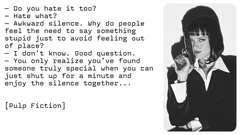
Awkward silence Pulp Fiction dialogue
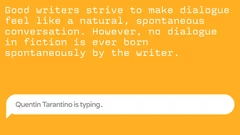
Natural dialogue in fiction writing
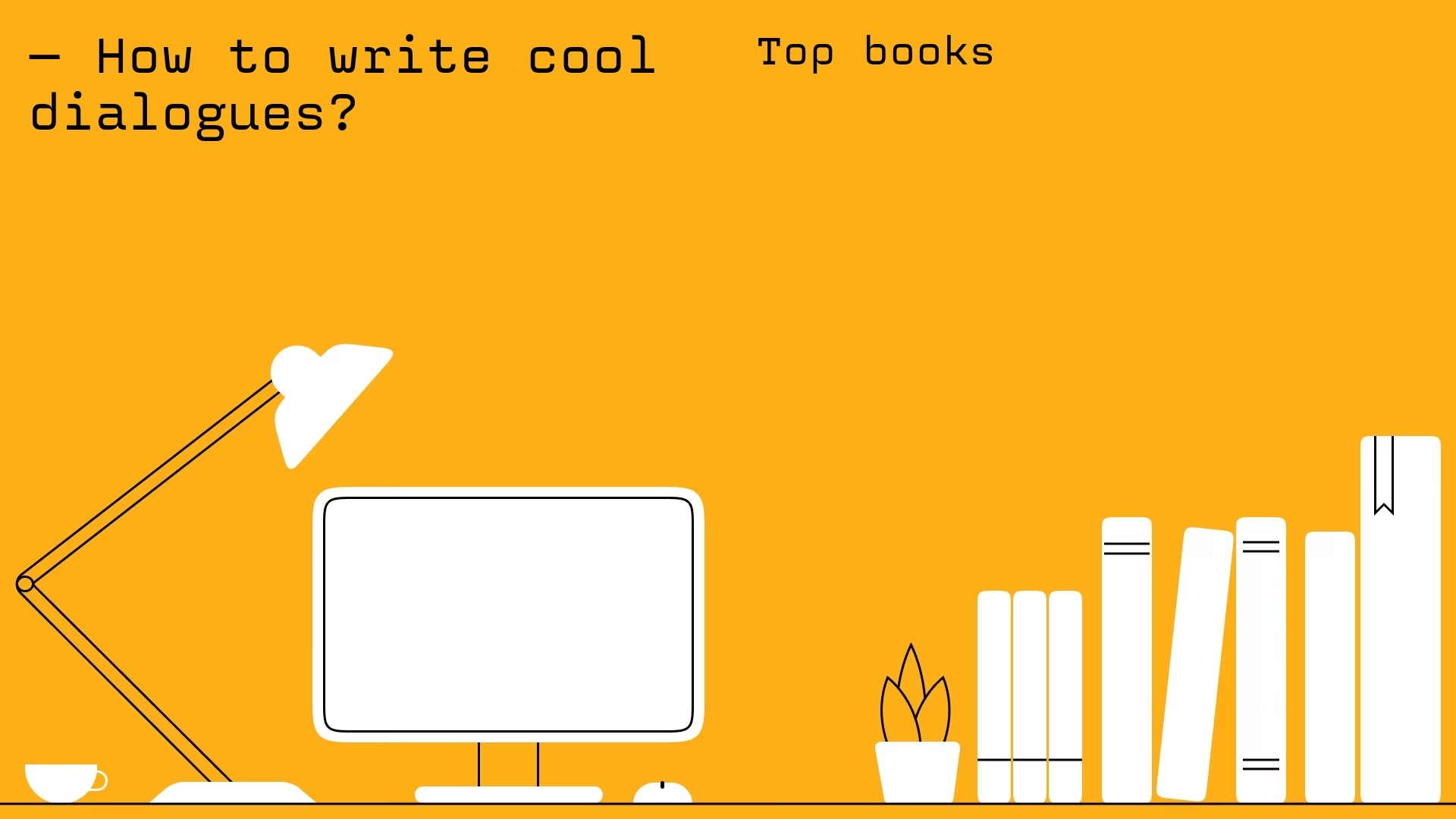
Great artist potential anywhere
Books improve dialogue writing skill
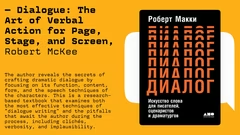
Robert McKee dialogue writing book
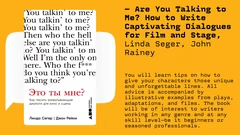
Linda Seger dialogue tips book
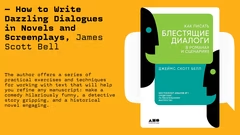
James Scott Bell dialogue techniques
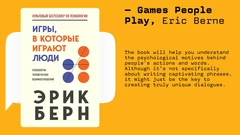
Eric Berne psychological motives book
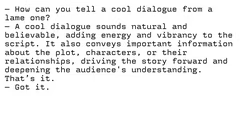
Cool vs lame dialogue characteristics
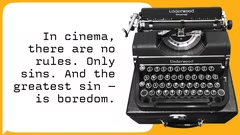
Cinema sins boredom avoidance
Actors bring dialogues to life
Quentin Tarantino script notebook quote

Writing Engaging Dialogues

14 slides

Template for presentations on writing engaging dialogues with quotes, tips and book recommendations.

collimator
View template

About the template

Template for presentations on writing engaging dialogues. It is useful for writers, screenplay authors and students of creative writing courses. The template contains blocks with quotes, tips, book recommendations and space for examples of dialogues from literature and cinema.

Who can use the template

Writers, screenplay authors and students of creative writing courses can use the template. It will be useful for those who want to improve their skills in creating natural and engaging dialogues. The template helps to systematize knowledge about the principles of effective dialogue and share it with an audience.

Using examples of dialogues

The template allows you to include quotes from famous films and literary works. For example, you can use dialogues from Pulp Fiction to show how effective dialogue enriches the story. You can also compare examples of good and bad dialogues to help the audience understand the difference. This will allow writers to identify common mistakes and learn proven techniques.

Recommending literature

The template has slides for recommending books that cover techniques for writing dialogues in novels and screenplays. For instance, Robert McKee’s book analyses the function, content and form of dialogue. Linda Seger and John Rainey offer tips for creating memorable lines. These recommendations will be useful for the audience as additional materials for self-education, regardless of their writing experience.

Applying the template in practice

The template can be used in workshops, online courses and writing groups. In a workshop, it will help to organize a discussion about the elements of effective dialogue. In an online course, slides will complement video lectures. In writing groups, the template will help to structure meetings aimed at improving members’ skills in writing dialogues.

FAQ

  • What does a presentation consist of?

    Title slide. Table of contents. Section dividers. Summary. Conclusion.

  • How can I make a presentation more engaging?

    Use visual elements, illustrations, charts, and concise bullet points. Add examples, stories, and animations if appropriate. The key is maintaining balance between text and visuals.

  • How to properly structure presentation slides?

    Each slide should focus on a single main idea. Use headings, brief bullet points, and visuals to support it. Group slides logically so that information flows sequentially.

  • How should text be formatted in a presentation?

    Use large fonts, avoid long paragraphs, and highlight key points. Ideally, keep 6–7 lines of text per slide. Ensure high contrast between the background and text.

  • How to quickly prepare a presentation?

    Use a ready-made template and select 5–7 main slides. Focus on key facts and striking examples. Don’t aim for perfection — a clear, ready version is better than a delayed, overloaded one.