




Hardcore punk introduction
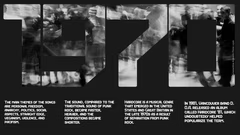
Hardcore genre origins and characteristics
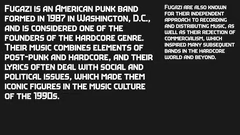
Fugazi band history and influence
Hardcore culture self-reliance
Fugazi Hollywood Palladium concert
Straight Edge movement principles
Ian MacKaye on Straight Edge philosophy
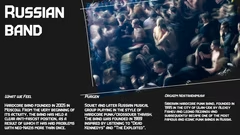
Russian hardcore bands overview
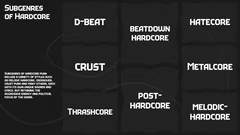
Hardcore punk subgenres list
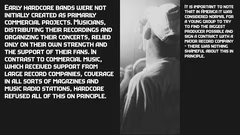
Hardcore independence from commercialism

Hardcore Music History

10 slides

Explore the origins, development, and influence of hardcore music through its key figures and subgenres.

kraft
View template

About the template

The «History» template is designed for presentations tracing the development of cultural and musical phenomena. It includes elements for text, images, charts, and diagrams, making it suitable for detailing a genre’s evolution, key contributors, and subgenres. The structure helps organize information logically, guiding the audience through the subject’s history step by step.

Presenting the Origins of Hardcore Music

Hardcore music originated in the late 1970s as an intense offshoot of punk rock. The template helps illustrate its defining traits: faster tempos, heavier sound, and concise song structures. Use specific slides to explain pivotal moments, like the role of the album «Hardcore '81» by D.O.A. in popularizing the genre. Add key dates and quotes to create a chronological narrative that engages the audience.

Featuring Influential Bands

The template allows you to highlight key bands and their contributions. For example, dedicate slides to Fugazi, which merged post-punk and hardcore. Detail their independent production approach and socially charged lyrics. Mention Minor Threat and their link to the straight edge movement. Visuals like album covers and concert posters can enhance the presentation, making it more immersive for fans and newcomers alike.

Analyzing Hardcore Subgenres

Use the template to explore subgenres like melodic hardcore, crust punk, and metalcore. Create a slide for each subgenre, outlining how they build on hardcore’s aggression while adding their own elements. Discuss the DIY ethos and anti-commercial stance that define the genre’s culture. Explain how bands set up their own studios and organized shows, strengthening the community. This can resonate with audiences interested in music’s cultural aspects.

Comparing Global Hardcore Scenes

The template facilitates comparisons of hardcore across different countries. Include bands like What We Feel and Purgen from Russia to demonstrate the genre’s international spread. Show how these groups adapted hardcore to their local contexts. Contrast the scenes in various countries, pointing out unique traits and commonalities. This approach can appeal to diverse audiences, offering fresh insights into the genre’s global impact.

FAQ

  • How many slides should a presentation have?

    An optimal range is 10 to 20 slides, but it depends on the topic and presentation format. The main goal is to avoid overload and maintain a logical flow.

  • How is a presentation different from a report?

    A report contains detailed information, while a presentation focuses on key points and visuals. Presentations are designed for verbal communication or quick summaries.

  • Can I import a template into my presentation?

    Yes, most tools allow you to upload a ready-made template, apply it to existing slides, or use it as a base for a new presentation.

  • How to adapt a presentation for different audiences?

    Consider the audience’s background and interests. Adjust examples, terminology complexity, and visuals to make the content understandable and relevant.

  • How can I make a presentation easy to understand?

    Break information into sections, use headings, concise bullet points, and visuals. Follow a clear structure: introduction → main content → conclusions.