




Yohji Yamamoto study deconstruction fashion history legacy
Yohji Yamamoto overview life career fashion stages
Yohji Yamamoto early life childhood
Yohji Yamamoto upbringing dressmaker mother Tokyo
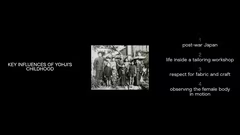
Yohji Yamamoto childhood influences post-war Japan
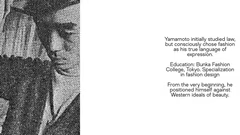
Yohji Yamamoto fashion education Bunka College
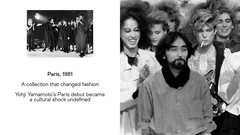
Yohji Yamamoto Paris debut 1981 fashion collection
Yohji Yamamoto quote legacy fashion philosophy
Yohji Yamamoto key moments fashion aesthetic collaborations
Yohji Yamamoto runway show SS19 fashion presentation
Yohji Yamamoto fashion study continuation credits

Yohji Yamamoto Fashion Legacy

11 slides

Template for presentations about fashion history and designers, with a focus on the career and influence of Yohji Yamamoto.

pofo
View template

About the template

Template «Fashion study» is intended for presentations about fashion history, biographies of designers and analysis of fashion trends. It is useful for academic projects in universities, lessons in fashion schools and storytelling of brands. The template contains text blocks, headings and space for images, which allows you to present information in a structured manner and highlight key stages and influences in the development of fashion.

Creating designer biographies with the template

The template allows you to build a presentation about the life and work of fashion designers in a chronological order. For example, with its help you can show the path of Yohji Yamamoto from the early years in Tokyo to global recognition. Each slide can be dedicated to a certain period of the designer's career or an important aspect of his work. This makes the presentation logical and interesting for the audience.

Analysing fashion trends and concepts

With this template you can prepare a presentation about the evolution of fashion trends and design philosophies. You can consider how designers have changed fashion, for example, how Yohji Yamamoto introduced deconstructive style and made black a key color. The structure of the slides helps to compare different periods and collections, showing how fashion reflects cultural changes. The template will be useful for university courses, seminars for industry professionals and brand presentations.

Incorporating visual content

The design of the template makes it easy to include visual content. You can add photos of fashion shows, collections and iconic items to illustrate your narration. For example, images from Yohji Yamamoto's SS19 show, accompanied by descriptions, will make the presentation more vivid. The combination of text and images helps to better capture the audience's attention and improve the memorability of the material, whether the listeners are students, fashion lovers or industry experts.

Recommendations for using the template

  • Begin with a general slide that lists the main sections of the presentation.
  • Present the designer's career in chronological order, noting key events and sources of inspiration.
  • Insert quotes from the designer to make the presentation more authentic and profound.
  • Use the space for text and images to make the presentation visually attractive and informative.
  • Conclude with a slide that summarizes the designer's contribution to fashion and their current influence on the industry.

Other ideas for your presentations

FAQ

  • What techniques help to cope with anxiety before a presentation?

    Take deep breaths, do breathing exercises, warm up your hands, get in a positive mood, and imagine yourself as a confident speaker. Rehearsals and preparation also significantly reduce anxiety.

  • What does a presentation consist of?

    Title slide. Table of contents. Section dividers. Summary. Conclusion.

  • How do I choose a presentation template?

    The choice of template depends on the purpose and audience of the presentation. Business presentations require clean and professional templates, educational ones may benefit from more visual designs, and marketing presentations often use bold and dynamic layouts. The design should enhance clarity rather than distract from the content.


  • How to use colors to highlight information?

    Use contrasting colors to emphasize key points. Avoid overloading slides with bright shades and maintain a consistent design style. Colors should aid understanding, not distract.

  • How to choose the right images for slides?

    Choose images that support the text and illustrate key ideas. Prefer high-quality, clear images, avoiding slides overloaded with visual elements.