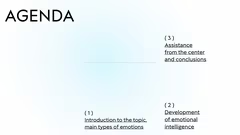





Self-organization and time management concepts overview.
Key terms and differences explained.
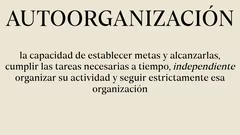
Definition of self-organization and its importance.
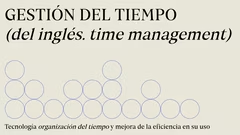
Time management technology and efficiency.
Linking self-organization and time management.
Components of effective time management.
Success depends on time and resource allocation.
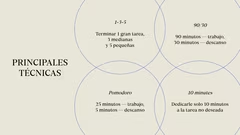
Various time management techniques listed.
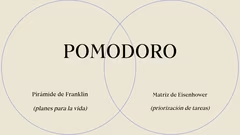
Additional time management methods described.
General rules for improving productivity.
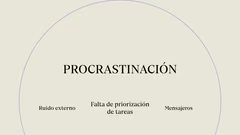
Common procrastination causes identified.
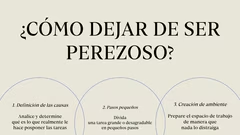
Steps to overcome laziness and procrastination.
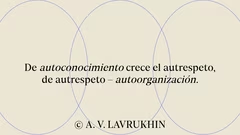
Quote on self-knowledge and self-organization.
Invitation for questions and discussion.

Time Management Strategies

14 slides

Presentation template on self-organization and time management to improve productivity and achieve goals.

ooze
View template

About the template

The template is designed for creating presentations on self-organization and time management. It contains slides with key terms, techniques and rules that help improve productivity. The material can be used in trainings for employees or in educational courses.

Understanding the principles of self-organization is key to effective time management. The template explains how to set goals, prioritize tasks and follow a plan. It will be useful for conducting workshops for teams or individual consultations. The material breaks down complex concepts into simple elements, which makes it easier to understand the basics of self-organization. There are various techniques for managing time more effectively. The template provides examples of popular methods, such as the Pomodoro technique (25 minutes of work and 5 minutes of break) and the 1-3-5 rule (one major, three medium and five small tasks per day). These techniques can be demonstrated using slides to show their practical application. Presenting such methods will help teams develop better work habits. Procrastination often hinders productivity. The template identifies common causes of procrastination, such as lack of prioritization and distractions, and offers ways to deal with them. For example, it suggests breaking down large tasks into smaller steps and creating a distraction-free workspace. Using the template, you can develop a plan to overcome procrastination and improve time management. In a business context, good time management helps teams meet deadlines and improve workflow. The template can be used to train employees in time management techniques. By including real examples and case studies from different industries, you can show how these methods have been successfully used. This will encourage teams to incorporate effective time management into their daily routines.

Other ideas for your presentations
FAQ

  • How can I make a presentation more engaging?

    Use visual elements, illustrations, charts, and concise bullet points. Add examples, stories, and animations if appropriate. The key is maintaining balance between text and visuals.

  • How to properly structure presentation slides?

    Each slide should focus on a single main idea. Use headings, brief bullet points, and visuals to support it. Group slides logically so that information flows sequentially.

  • How to choose the right images for slides?

    Choose images that support the text and illustrate key ideas. Prefer high-quality, clear images, avoiding slides overloaded with visual elements.

  • How to quickly prepare a presentation?

    Use a ready-made template and select 5–7 main slides. Focus on key facts and striking examples. Don’t aim for perfection — a clear, ready version is better than a delayed, overloaded one.

  • What is a presentation?

    A presentation is a way of visually presenting information to an audience with the aim of persuading, informing, or educating. It combines text, images, and graphics to convey a key idea clearly and effectively.