About the template
The presentation explores emotions and feelings, examining their types, physiological responses, and social implications, as well as strategies for developing emotional intelligence. It is structured with text blocks, lists, and headings to help organize information logically. Topics include distinguishing between emotions and feelings, understanding basic emotions, examining the role of emotions in social interactions, and learning techniques to manage emotions effectively. The material can be useful for psychology courses, team-building workshops, or personal development seminars.
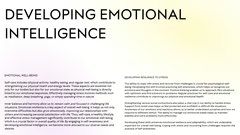
Distinguishing Emotions from Feelings
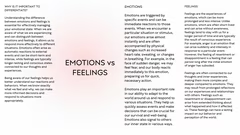
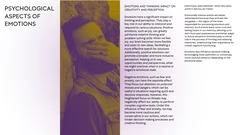
Emotions and feelings shape human behavior and social interactions. Emotions are immediate reactions to stimuli, whereas feelings are more enduring conscious states. Grasping this difference is essential for improving self-awareness and relationships. For instance, identifying what triggers specific emotions can help reduce stress and prevent conflicts. Awareness of physical responses like changes in heart rate or hormone levels can lead to better coping strategies.
Understanding these mechanisms lays the groundwork for emotional intelligence. People can learn to manage their reactions more effectively, leading to improved interpersonal skills and decision-making. Recognizing emotional patterns helps in predicting and controlling behavioral responses.
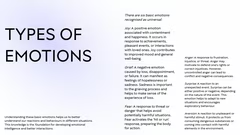
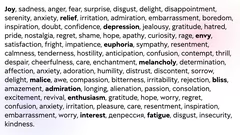
- Learn to recognize common emotions: joy, sadness, fear, anger, surprise, and disgust.
- Observe physiological changes linked to different emotions.
- Compare emotions and feelings to enhance self-awareness.
- Analyze how emotions affect thought processes and actions.
Building Emotional Intelligence
Emotional intelligence enables individuals to understand and manage their own emotions and those of others. It plays a significant role in personal growth and professional success. Higher emotional intelligence leads to stronger relationships, better decision-making, and more effective stress management.
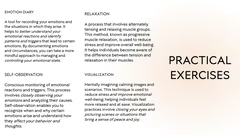
Methods to boost emotional intelligence include self-observation, maintaining an emotion diary, and using relaxation techniques. Regularly tracking emotional reactions and their causes can sharpen self-awareness and self-control. Over time, these skills contribute to greater emotional well-being and life satisfaction.
- Incorporate meditation and mindfulness practices to lower stress levels.
- Use cognitive restructuring to change negative thought patterns.
- Include physical exercise in your routine to improve mood and decrease anxiety.
- Utilize social networks for support during emotionally challenging times.
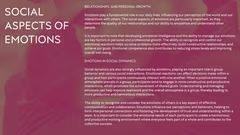
Emotions and Social Interactions
Emotions significantly impact how people communicate and work together. They shape perceptions and responses in social situations, influencing empathy and relationship development. A positive emotional environment in groups often leads to more cooperative and productive interactions.
Being attuned to the emotions of others improves communication and teamwork. Emotional awareness helps prevent misunderstandings and resolve conflicts, fostering a more harmonious work atmosphere. Strong emotional competence builds trust and understanding among team members, enhancing overall performance.
- Enhance empathy by paying close attention to what others say.
- Identify the emotional states of colleagues and teammates.
- Apply emotional awareness to resolve interpersonal conflicts.
- Work to create a supportive emotional atmosphere in groups.
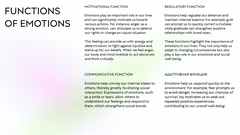
Improving Well-Being Through Emotion Management
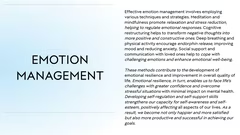
Controlling emotions is crucial for both physical and mental health. Techniques like progressive muscle relaxation, visualization, and deep breathing can alleviate stress and enhance overall well-being. Effective emotion management also sharpens decision-making and problem-solving skills.
Self-care activities, such as eating a balanced diet, exercising regularly, and getting enough rest, build emotional resilience. The ability to handle stress and bounce back from setbacks is vital for maintaining good mental health. Emotionally resilient individuals can tackle life’s challenges more confidently and with less impact on their mental state.
- Make physical exercise a part of your everyday schedule.
- Use relaxation exercises to keep stress under control.
- Cultivate a positive outlook to increase optimism.
- Nurture social ties to gain emotional support when needed.