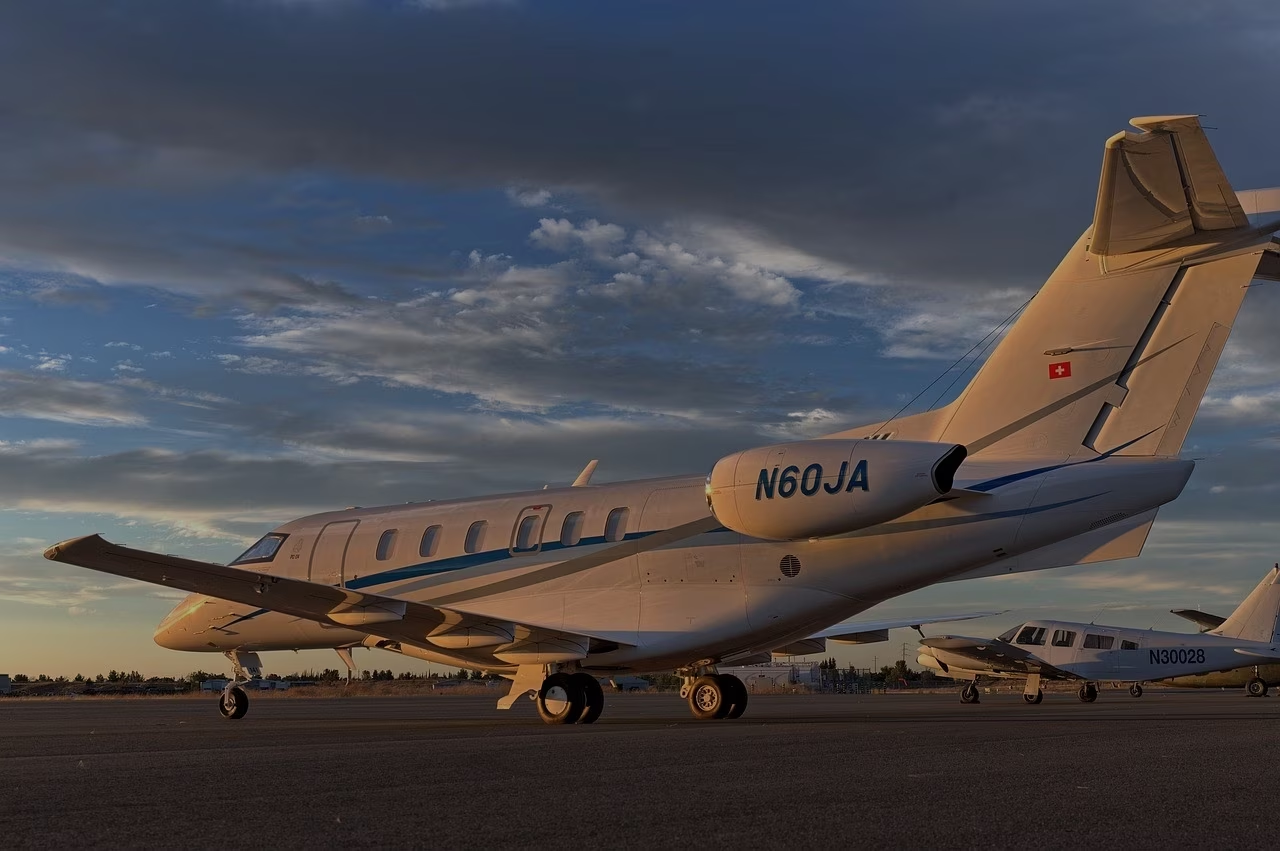
Business Jet
Content 1.​ Introduction to Business Jets 2.​ History of Business Jets 3.​ Types of Business Jets 4.​ Key Features and Amenities 5.​ Benefits of Using Business Jets 6.​ Costs and Ownership 7.​ Market Trends and Future Outlook 8.​ Major Manufacturers and Models 9.​ Regulatory and Safety Considerations 10.​ Environmental Impact and Sustainability
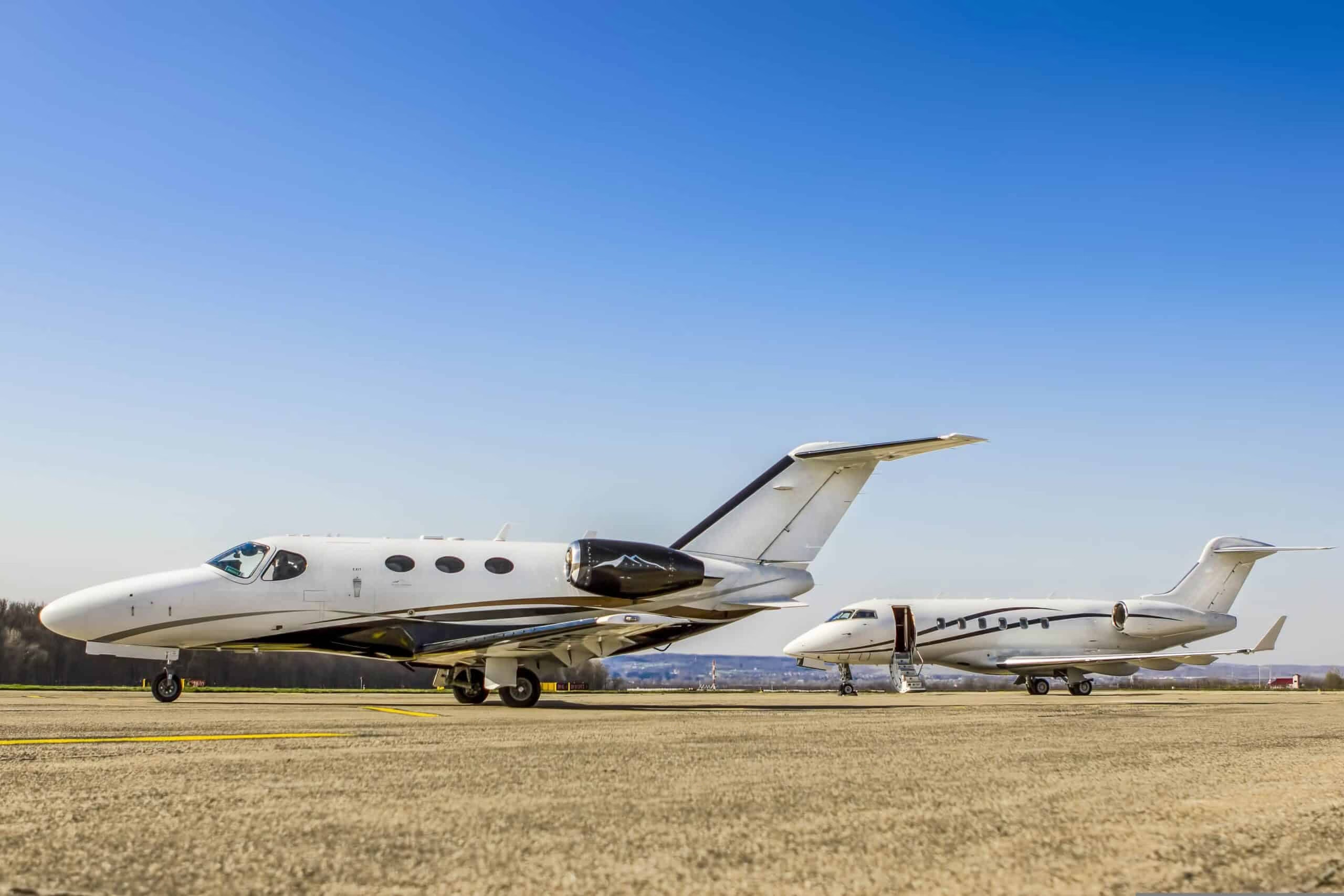
Introduction to Business Jets
Business jets are privately owned or leased aircraft used for executive travel,​ corporate transportation,​ and other specialized purposes.​ Unlike commercial airliners,​ they offer flexibility,​ speed,​ and privacy,​ making them ideal for businesspeople who need to travel efficiently and comfortably.​ Business jets come in various sizes and configurations,​ from light jets suitable for short-haul flights to large cabin jets capable of transcontinental travel.​
Key factors that distinguish business jets include their range,​ speed,​ passenger capacity,​ and onboard amenities.​ The market for business jets has grown significantly over the years,​ driven by the increasing need for efficient and secure travel options for business leaders and high-net-worth individuals.​
History of Business Jets
The history of business jets dates back to the mid-20th century when the first purpose-built business jets emerged.​ The development of jet technology after World War II paved the way for the creation of aircraft designed specifically for executive use.​ One of the pioneers in this field was the Lockheed JetStar,​ introduced in the 1950s.​
Over the decades,​ numerous manufacturers have entered the market,​ each bringing innovations in design,​ performance,​ and efficiency.​ The evolution of business jets has been marked by advancements in materials,​ engines,​ avionics,​ and cabin comfort.​ Today,​ the market is highly competitive,​ with companies like Gulfstream,​ Bombardier,​ and Cessna leading the way in delivering cutting-edge business jet solutions.​
Types of Business Jets
Business jets are categorized into several types based on their size,​ range,​ and performance capabilities.​
The main categories include light jets,​ midsize jets,​ super-midsize jets,​ and large cabin jets.​
Light jets are ideal for short-haul flights and are popular among smaller companies and private users due to their lower operating costs.​ Midsize jets offer a balance of range and passenger capacity,​ making them suitable for medium-distance travel.​ Super-midsize jets provide enhanced range and comfort,​ catering to the needs of more demanding travelers.​ Large cabin jets are designed for long-haul flights and offer luxurious amenities,​ making them the choice for top executives and high-profile individuals.​ Each type has its unique features and advantages,​ catering to different business travel requirements.​
Key Features and Amenities
Modern business jets are equipped with a wide range of features and amenities to ensure comfort,​ productivity,​ and safety.​ These include advanced avionics systems,​ state-of-the-art communication tools,​ and sophisticated navigation equipment.​ The cabins are designed to provide a luxurious and comfortable environment,​ often featuring spacious seating,​ high-quality entertainment systems,​ and advanced in-flight connectivity options.​
Some business jets also offer fully equipped meeting rooms,​ galleys with cooking facilities,​ and even onboard Wi-Fi.​ The focus on amenities and comfort is a key aspect that differentiates business jets from commercial flights,​ providing a more personalized and efficient travel experience.​
Benefits of Using Business Jets
There are numerous benefits to using business jets for corporate and executive travel.​ The primary advantage is the flexibility to travel on one's own schedule,​ without being constrained by commercial flight timetables.​ Business jets also offer enhanced privacy and security,​ which is crucial for high-profile individuals and companies dealing with sensitive information.​
Additionally,​ they provide direct access to smaller airports that are not served by commercial airlines,​ allowing for more convenient and time-saving travel routes.​ The ability to work or relax in a comfortable environment during the flight further enhances productivity and well-being.​ Overall,​ business jets offer a superior travel experience compared to commercial flights.​
Costs and Ownership
Owning or leasing a business jet involves significant financial considerations.​ The initial purchase cost can range from several million to hundreds of millions of dollars,​ depending on the model and specifications.​ Operating costs include fuel,​ maintenance,​ insurance,​ crew salaries,​ and hangar fees.​
Leasing is an alternative option that allows companies to access the benefits of business jet travel without the upfront investment and long-term commitment of ownership.​ There are different leasing models,​ such as wet lease (which includes crew and maintenance) and dry lease (which does not).​ Careful financial analysis and planning are essential to determine the most cost-effective approach for using business jets.​
Market Trends and Future Outlook The business jet market is influenced by various trends and factors,​ including economic conditions,​ technological advancements,​ and changes in travel demand.​ In recent years,​ there has been a growing interest in more fuel-efficient and environmentally friendly business jets.​
Manufacturers are investing in research and development to improve engine efficiency,​ reduce emissions,​ and enhance overall performance.​ The rise of digital technologies is also shaping the market,​ with advanced avionics and connectivity solutions becoming standard features.​ The future of business jets looks promising,​ with continued innovation expected to drive growth and expansion in the market.​
Major Manufacturers and Models
The business jet market is dominated by several major manufacturers,​ each offering a range of models to cater to different needs.​ Gulfstream is renowned for its large cabin jets,​ known for their long range and luxurious amenities.​ Bombardier offers a variety of models,​ including the popular Challenger and Global series,​ which are favored for their performance and comfort.​
Cessna is well-known for its light and midsize jets,​ such as the Citation series,​ which are popular among smaller businesses and private users.​ Other notable manufacturers include Dassault with the Falcon series and Honda with the HondaJet.​ Each manufacturer has its unique strengths and market positioning.​
Regulatory and Safety Considerations
Operating business jets is subject to strict regulatory and safety standards to ensure the safety of passengers and crew.​ Regulatory bodies such as the Federal Aviation Administration (FAA) in the United States and the European Union Aviation Safety Agency (EASA) oversee the certification,​ maintenance,​ and operation of business jets.​ Safety considerations include regular inspections,​ maintenance schedules,​ and compliance with flight and operational procedures.​
Crew training and certification are also critical aspects of ensuring safe operations.​ Adhering to these regulations and safety standards is essential for the continued reliability and reputation of the business jet industry.​
Environmental Impact and Sustainability
The business jet industry is increasingly focusing on reducing its environmental impact and promoting sustainability.​
Efforts include the development of more fuel-efficient engines,​ the use of sustainable aviation fuels (SAF),​ and the implementation of eco-friendly operational practices.​
Manufacturers and operators are exploring ways to minimize emissions and noise pollution.​ Additionally,​ there is a growing awareness of the carbon footprint associated with business travel,​ leading to initiatives to offset emissions through carbon credits and other programs.​ Sustainability is becoming a key consideration for companies and individuals choosing business jet travel.​
Sources 1.​ https:​/​/​images.​pexels.​com/​photos/​18241394/​pexels-photo-18241394.​jpeg?​auto=​compress&cs=​tinysrgb&h=​627&fit=​crop&w=​1200 2.​ https:​/​/​www.​housesumo.​com/​wp-content/​uploads/​2021/​03/​To-New-Zealanders-Who-Are-Planning-On-Moving-To-Australia.​jpg 3.​ https:​/​/​flycraft.​com/​wp-content/​uploads/​general/​mustang-on-ground-scaled.​jpg